Creator HoloLens believes that smartphones came to an end
Considering how much modern man has become dependent on smartphones, it’s not at all surprising that he practically does not part with his gadget. Check the temperature outside the window, read the news, check the mail and messages from friends in numerous messengers, laugh at ridiculous pictures on social networks – all this can be done with a single compact device. About fifty years ago, no one could have dreamed of such a thing. But not everyone believes that smartphones have a future.
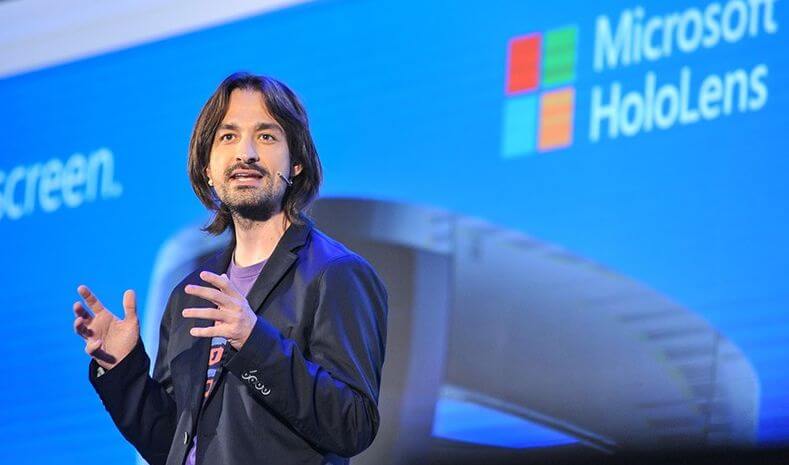
«Smartphones are already dead. People just have not realized it yet», says Microsoft employee Alex Kipman, thanks to which such devices as Kinect and HoloLens were born.
Kipman is sincerely convinced that the future of mankind is behind hybrid devices that can complement the reality surrounding us with virtual images and interfaces. Of course, he tends to the fact that the headset HoloLens and similar devices will revolutionize the technology. Such a statement by a prominent engineer sounds like a provocation. But if you think about his words in the long term, it becomes clear that, most likely, they share a common sense.
The market for mobile devices is simply huge. In this year alone, manufacturers plan to sell more than 1.5 billion smartphones around the world. Microsoft Corporation, unlike its competitors, does not want to focus on the mobile segment of the market, focusing on alternative technologies. Including those that we demonstrated on the example of HoloLens.
Attempts to realize a mixed reality in portable electronics are made regularly. Google has already managed to experiment with its glasses Glass, many manufacturers of smartphones and even game consoles tried to combine the camera and video games built into the device. But to this day, the technology of mixed reality remains something of little use and looks nothing more than pampering.
In the next decade, the development of technology should provide a sharp reduction in the size of wearable AR-headsets and increase their computing power. And this, in turn, will significantly expand the opportunities that gadgets can provide their owners. Imagine that all the functions that your smartphone is doing today will be able to provide ordinary glasses in a thin frame. Just say the name of the subscriber – and you already talk with him, and even see his photo before your eyes. At the same time your hands are absolutely free.
Of course, there are some doubts as to whether the largest IT companies will invest billions in the development of this technology direction. But if you admit that HoloLens is just the first experiment with AR for a corporation like Microsoft, you can hope for the updated versions of the device in the future. Yes, and smartphones push out of the market will not be so easy. It’s silly to believe that Apple or Samsung will suddenly give up billions of net profits for the sake of experimental projects. If this happens, it is definitely not in the next few years.